Essential Gardening Tools for Small Vegetable Gardens – A Beginner’s Guide to Avoid Mistakes (For Home Balconies/Terraces Potted Plants)
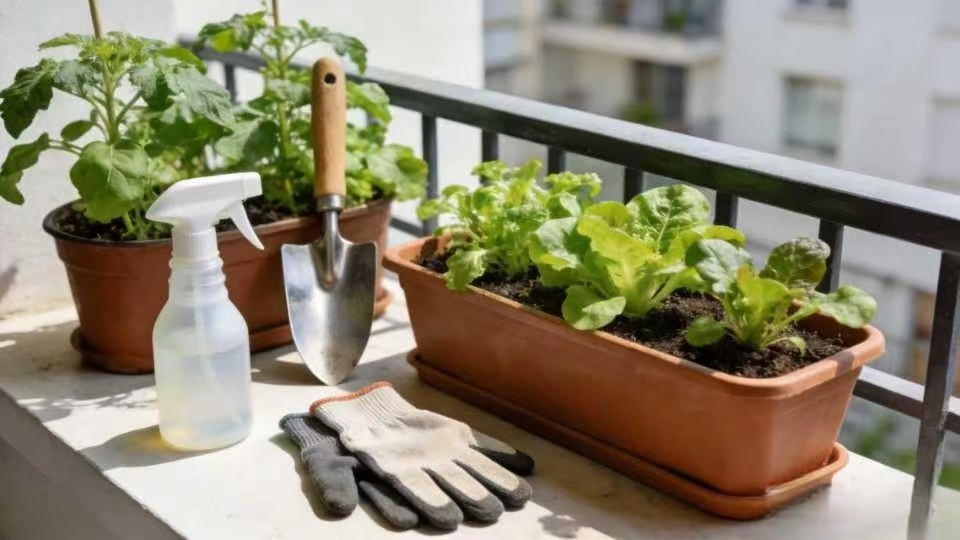
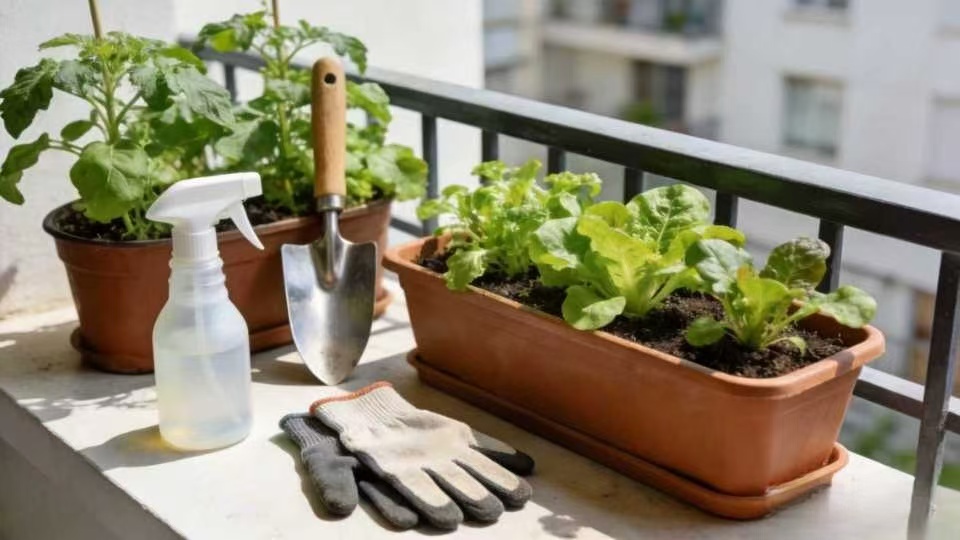
Whether it’s a balcony potted vegetable garden, a small terrace planting area, or a mini courtyard vegetable plot, choosing the right gardening tools can make vegetable growing easy and efficient, especially suitable for beginners to get started quickly. Focusing on the core pain points of small vegetable garden growers (especially beginners) and combining with mainstream small-scale planting habits, this article compiles a list of essential gardening tools, divided into three categories: core must-haves, auxiliary improvements, and beginner mistake avoidance, helping you save money and easily create a high-yield and tidy small vegetable garden.
I. Core Essential Tools
The core needs of small vegetable garden growers (especially beginners) are “lightweight, practical, and space-saving”. No complex functions are required; the focus is on balancing portability and durability, adapting to small-area planting and storage needs such as balcony and terrace potted plants, and avoiding occupying too much space. This is also the core logic of the tool recommendations in this article.
1. Gardening Gloves: Basic Protection, Practical and Convenient
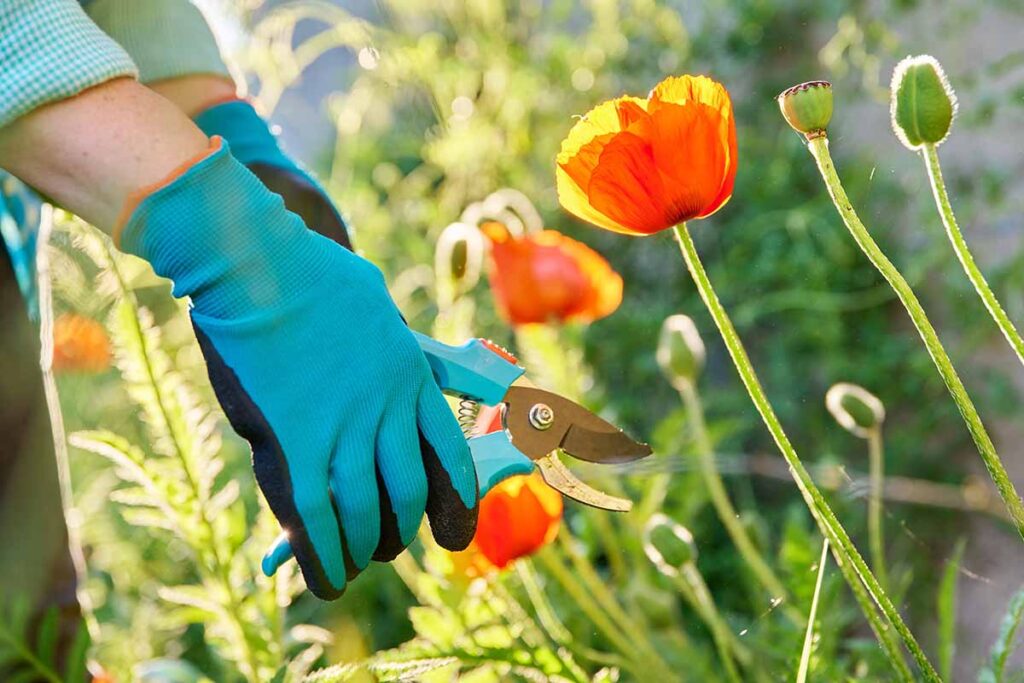
Gardening gloves are a basic essential tool for small vegetable gardens, mainly used to protect hands from soil, weeds, and branches, while keeping hands clean. It is recommended to choose waterproof rubber gloves (outer layer) + cotton lining (inner layer) that fit the hand shape, which are puncture-proof, dirt-proof, and breathable, suitable for all operations such as turning soil, weeding, and harvesting. Beginners do not need to choose heavy professional models; lightweight, fit, and washable basic models can meet the needs, adhering to the principle of “reuse and simplicity”.
Purchasing Tips: Prioritize finger-separated design to fit hand movements and avoid affecting fine operations; sizes are divided into men’s and women’s models to fit hand size and prevent slipping during operation; prioritize machine-washable styles for easy cleaning and reuse, balancing environmental protection and convenience.
2. Mini Dual-Head Garden Trowel: Multifunctional Core, First Choice for Beginners
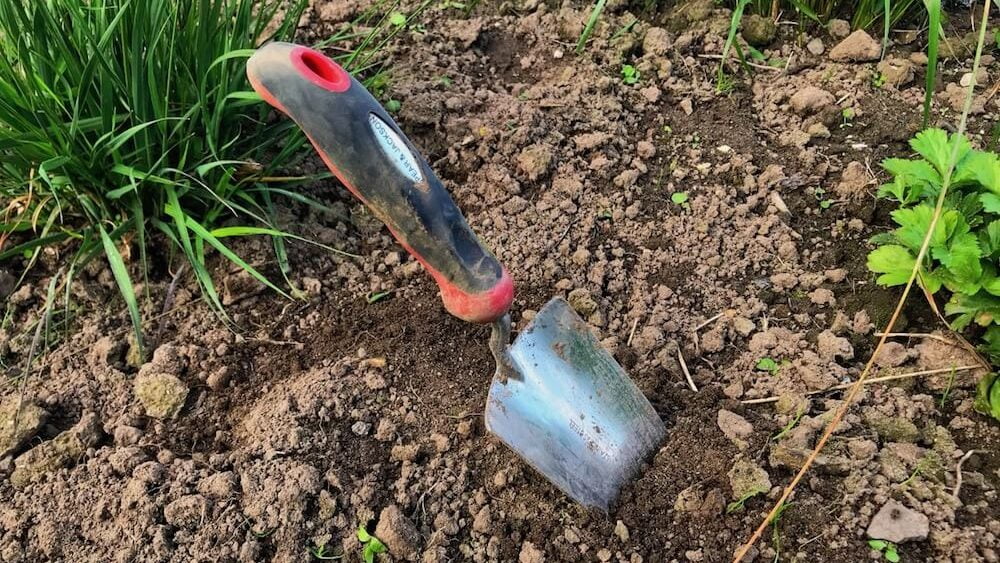
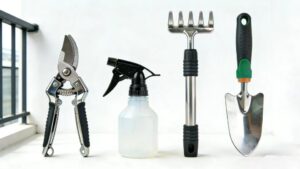
The mini dual-head garden trowel is the most frequently used tool in small vegetable gardens. There is no need for a large shovel; one can handle all basic operations such as sowing, transplanting, turning soil, and potting, perfectly solving the pain point of beginners “having redundant tools and not knowing what to buy”. It is recommended to choose a dual-head model with “one pointed end and one round end”. The pointed end is suitable for sowing holes and transplanting seedlings (accurate without damaging roots), and the round end is suitable for turning soil, hilling, and potting, adapting to balcony potted plants and small-area ground planting, saving space and being multifunctional.
Purchasing Tips: Prioritize stainless steel material for rust resistance and durability, avoiding plastic material (easy to break); choose non-slip wooden or environmentally friendly plastic handles for comfortable grip and no fatigue during long-term use; beginners can directly buy a mini three-piece set (trowel + rake + hoe) with high cost performance and convenient storage.
3. Adjustable Spray Bottle: Precise Watering, Suitable for Potted Plants
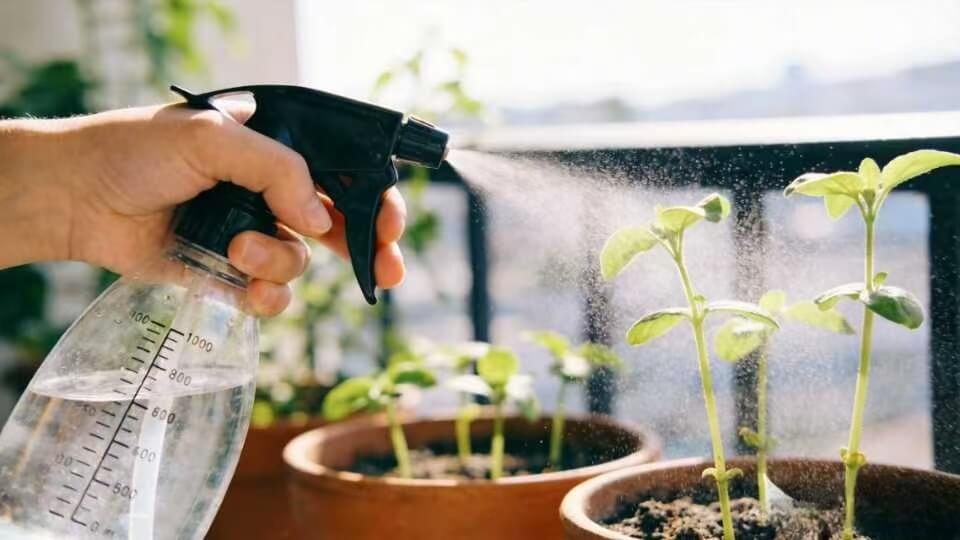
In potted planting, “improper watering” is a common pain point for beginners. The key to watering with an adjustable spray bottle is “precision and gentleness” to avoid washing down young seedlings and scattering soil. It is recommended to choose a handheld spray bottle with adjustable gears, supporting three gear switches: fine mist, direct spray, and shower. Use the fine mist mode for moisturizing after sowing and watering young seedlings, which is gentle and does not damage the seedlings; use the direct spray mode for watering mature plants and replenishing water, which is efficient and convenient; use the shower mode for dust removal and humidification of leaves, taking into account the growth needs of vegetables. A capacity of 1-1.5L is appropriate, lightweight and easy to hold, suitable for watering multiple potted plants on the balcony.
Purchasing Tips: Choose a long spout design to water deep inside potted plants, avoiding splashing leaves (pay attention to leaf cleanliness to prevent diseases); prioritize a transparent body with scales to easily control the amount of water and avoid overwatering or underwatering; the bottle body has good sealing without water leakage, and the handle is non-slip and easy to hold.
4. Mini Pruning Shears: Integrated Pruning and Harvesting, Suitable for Herbs/Vegetables
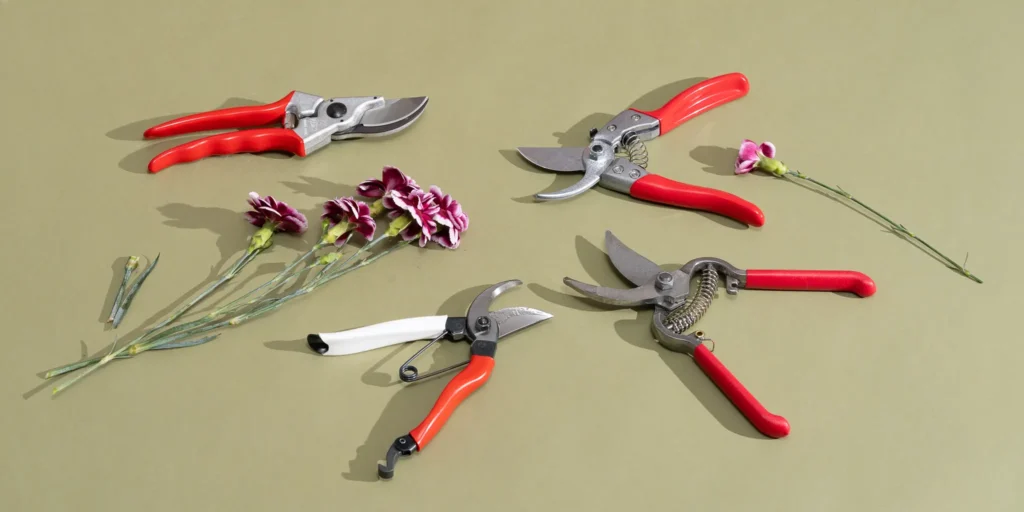
Mini pruning shears are essential tools, which can be used to prune withered flowers, leggy branches, and dead branches, as well as harvest herbs and small vegetables, serving two purposes and solving the pain point of beginners “single-function tools and wasted costs”. Beginners should choose mini bypass pruning shears with sharp blades and flat cuts, which do not damage branches and allow subsequent plant growth, fitting the needs of refined planting.
Purchasing Tips: Choose stainless steel blades for rust resistance, which can be regularly sharpened to keep them sharp; the handle has a spring design for labor-saving and convenience, which can be easily operated by women; the size is controlled at 15-20cm, lightweight and easy to store, avoiding large pruning shears (which take up space and are not useful).
II. Auxiliary Tools (Optional Purchase, Covering Subdivision Needs)
These tools are not essential, but they can greatly improve the planting experience, fit the core needs of small vegetable gardens of “efficiency, tidiness, and environmental protection”, and are suitable for people who want to optimize planting efficiency and pursue refined management. Choose on demand without waste.
1. Mini Garden Rake: Loosening Soil, Suitable for Refined Management of Potted Plants
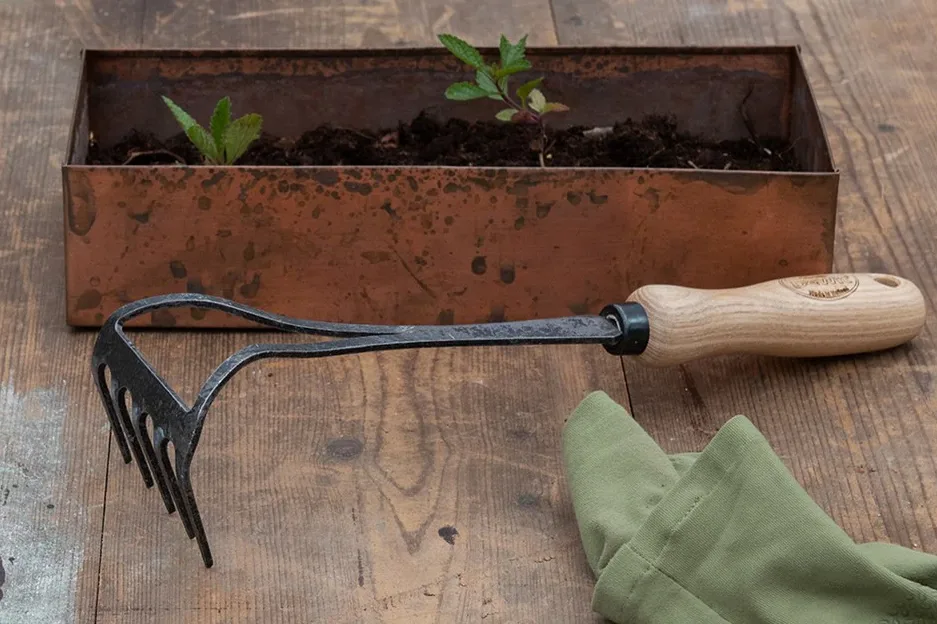
In potted planting, soil compaction is a common problem. The mini garden rake can be used to loosen the topsoil, clean up fallen leaves and weeds, especially suitable for soil preparation before sowing and daily potting soil maintenance, which can promote the breathing of vegetable roots and reduce diseases. Beginners should choose mini models with moderate tooth spacing, lightweight and easy to operate, avoiding large rakes (which take up space and are not suitable for potted plants), fitting the characteristics of small-space planting.
2. Soil Moisture Meter: A Must-Have Tool for Beginners to Avoid Mistakes, Precise Water Control
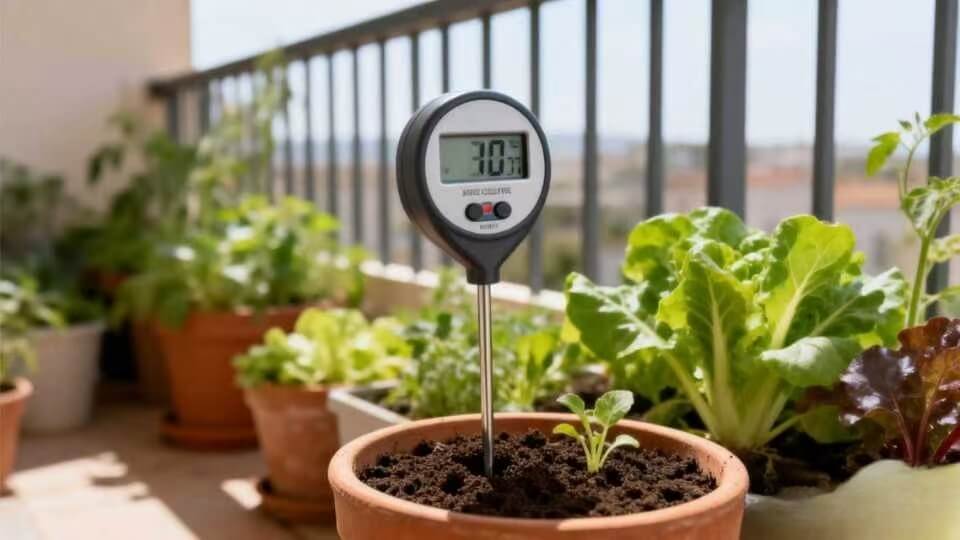
In beginner planting, “improper watering” is one of the main reasons for vegetable wilting. The soil moisture meter can perfectly solve this problem. Insert it into the soil to intuitively display the humidity without relying on experience. It can be bought for tens of yuan, making it a “water control artifact” essential for beginners. It is especially suitable for growing herbs and succulent vegetables, accurately controlling soil humidity to avoid root rot or drought.
3. Waterproof Plant Labels: Classified Management, Suitable for Multi-Variety Planting
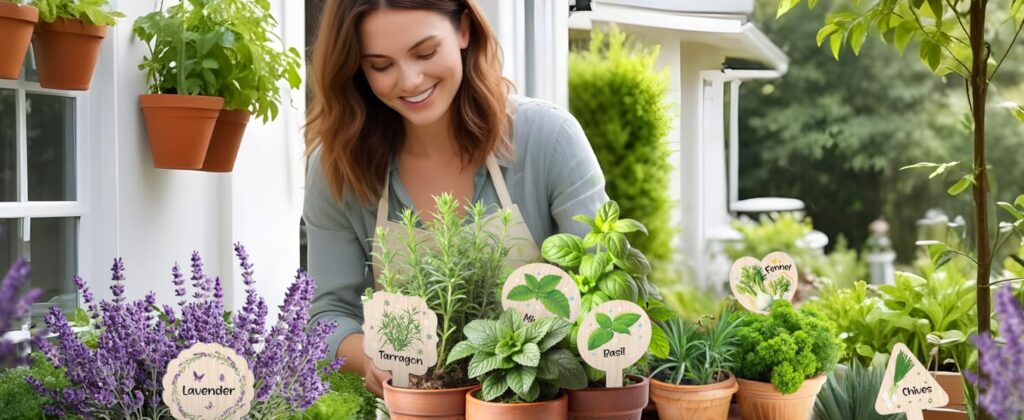
When growing multiple types of herbs and vegetables, waterproof plant labels can be used to record plant varieties, sowing/transplanting dates, and watering cycles, facilitating classified management and avoiding confusion. It is recommended to choose plastic or wooden waterproof models, which are not easy to be washed away by rain and can be reused, fitting the “refined and orderly” planting habit; erasable models are also available for repeated modification, which is more environmentally friendly.
4. Garden Trellis: Vertical Planting, First Choice for Space Saving
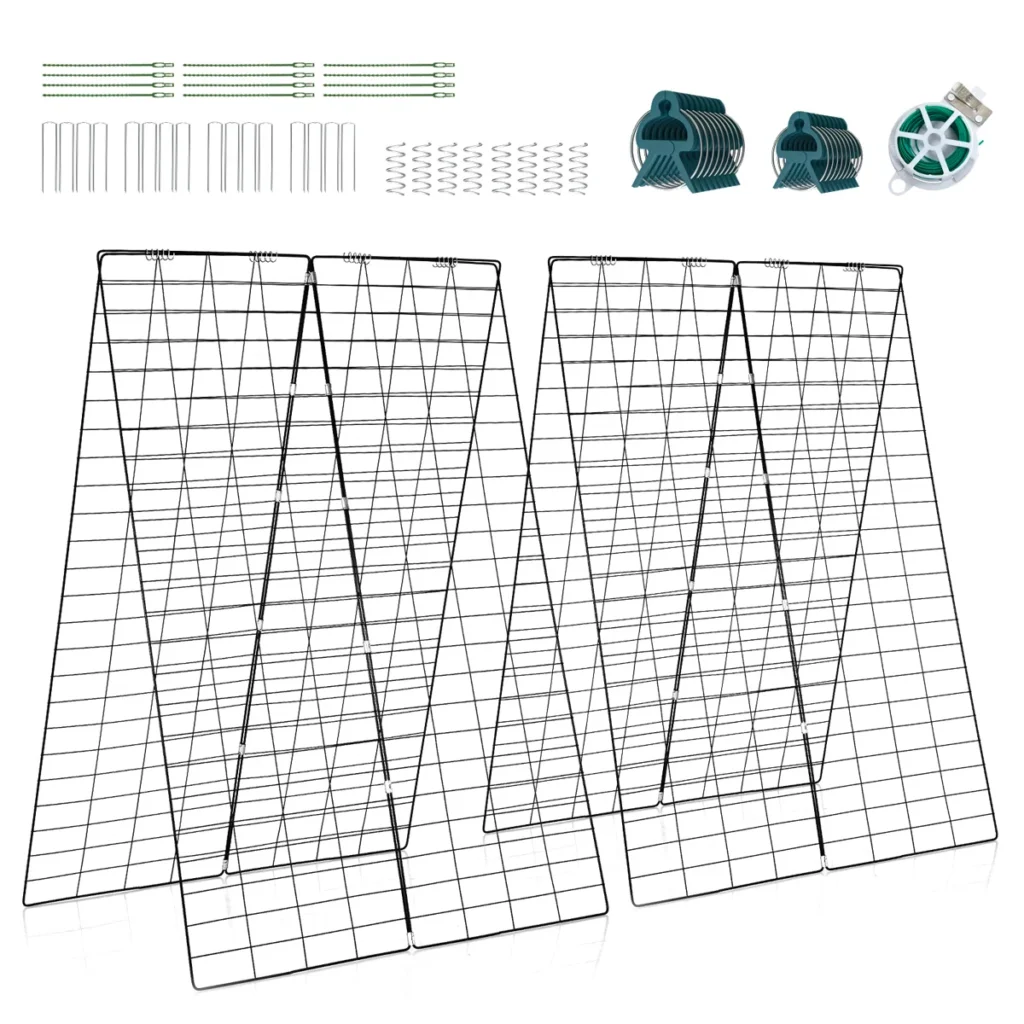
Balcony and terrace planting focuses on space utilization. The garden trellis is a core tool for vertical planting, suitable for growing climbing vegetables such as cucumbers, beans, and passion fruits. It can not only save horizontal space but also make plants ventilated and light-transmitting, reduce diseases and pests, and increase yield. It is recommended to choose an assembled carbon steel garden trellis with anti-corrosion treatment on the surface, which is not easy to rust, simple to assemble, can be adjusted in size according to the planting space, and can be folded for storage when not in use, fitting the space-saving needs.
5. Bird Netting: Protect Harvest, Suitable for Outdoor Small Vegetable Gardens

For outdoor terraces or courtyard small vegetable gardens, bird netting is an essential auxiliary tool, which can effectively prevent birds such as sparrows and magpies from pecking fruits, especially suitable for growing vegetables that are easy to be pecked by birds, such as cherry tomatoes, strawberries, and lettuce. It is recommended to choose high-strength nylon bird netting with fine and uniform mesh, which does not affect light and ventilation, can be freely cut according to the size of the vegetable garden, is simple to install, and can be stored and reused after use, fitting the concept of environmentally friendly and practical planting.
III. Beginner’s Guide to Avoid Mistakes (Focus on Pain Points, Enhance Content Value)
Small-scale planting emphasizes “simplicity without redundancy, practicality without waste, and environmental protection and recyclability”. Focusing on the core pain point of beginners easily buying tools blindly and wasting money, the following 4 key points to avoid mistakes are sorted out to help you save money and be efficient.
1. Do not buy large tools: Small vegetable gardens (especially balconies and terraces) have limited space. Large shovels, wheelbarrows, and heavy hoes are completely useless. They not only take up space but also increase costs. Prioritize mini and small models to adapt to small-area planting.
2. Do not buy multi-functional useless tools: Many tools claim to be “multi-functional”, but in fact, each function is not practical. For example, a gardening set with many redundant accessories is not as cost-effective as buying core tools separately. Adhere to the principle of “buy on demand and avoid waste”.
3. Do not pursue high-end brands: The core of gardening tools is durability and usability. Basic models of ordinary brands can fully meet the needs of small vegetable gardens. There is no need to pursue high-end brands. The budget can be controlled within 100-200 yuan to equip all core tools, prioritizing cost performance.
4. Replace with old item transformation: Follow the concept of environmental protection. Some tools can be transformed from old items at home, such as using a perforated mineral water bottle instead of a spray bottle, an old spoon instead of a small trowel, and an old wooden board to make a simple label. It is not only environmentally friendly but also saves money, and can meet the planting needs.
IV. Summary of Tool Purchase and Usage Skills
The core of small vegetable garden tools is “simplicity, practicality, space-saving, and recyclability”. There is no need to pursue completeness. First, equip the core essential tools, then add auxiliary tools according to your own planting needs (potted/ground planting, single variety/multi-variety), which can not only save costs but also improve planting efficiency.
Usage Skills: Clean the tools in time after use, especially metal shovels and pruning shears. Wipe them dry before storage to avoid rust and extend service life; small tools can be put into storage bags or wall-mounted storage racks to save space and keep the balcony and terrace tidy; regularly check the tool status, the blades of pruning shears can be sharpened regularly, and the密封圈 of the spray bottle can be replaced in time to ensure smooth use; prioritize reusable tool styles to practice the concept of environmentally friendly planting.
Whether you are a beginner or an experienced vegetable grower, as long as you follow the principle of “simplicity and practicality” and choose the right tools suitable for small-scale planting habits, you can easily take care of your balcony, terrace, or courtyard small vegetable garden, harvest fresh and healthy herbs and vegetables, and make vegetable growing simple and fun.